Fire Emblem: The Sacred Stones, the eighth game in the Fire Emblem series, greatly resembles its predecessors. Which may provide some comfort to old fans; the game play mechanics mostly remained the same. For people new to the series, one feature to take note of is permadeath where upon dying a character is lost for the remainder of that play-through. At times this may seems frustrating but it's one of the many appeals of the series. From a bird-eye view, players direct the actions of the characters to complete an objective each stage in turn-based combat. Reviewers has spoke favorably at the level of attention given to the game's story and individual units.
Graphics: 9
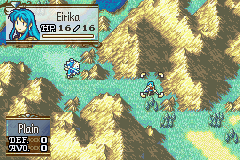
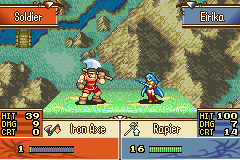
The graphics, as expected, are arguably more refined than previous installments albeit not by much. The game features a visually pleasing map display, fast-paced individual battles and some admirable animations. The character portraits has an acceptable level of detail compared to the rest of the game.
Sound: 8
The music was well-received by reviewers, nothing particularly worth criticizing, and I consider some to be quite engaging. There are 70 songs throughout the game, many of which are up-beat. Sounds outside of music were pretty standard.
Addictiveness: 7
I'm a fan of the Fire Emblem series, it's safe to say I'm often willing to try out the newer games. When I start a play-through, I usually play for several sets of many consecutive hours to beat it. However after the adventure is over, I'm not inclined to pick it back up. But for me, that usually apply to most games. Other reviewers have noted Sacred Stones' replay values to be above average.
Story: 7
It's a standard medieval fantasy story with swords, magic, and everything else people normally expect of the genre. The story takes place on a continent called Magvel, home to six kingdoms: Renais, Frelia, Jehanna, Rausten, Grado, and Carcino. Renais is the home of the main twin protagonists, prince Ephraim and princess Eirika. Frelia ruled by Hayden the Sage King is known for their pegasi military units. Jehanna is ruled by the Queen of the White Dunes, Ismaire. Rausten, a theocracy is ruled by the Divine Emperor, Mansel. Grado who suddenly experienced a boost in military power is ruled by the Silent Emperor, Vigarde. Carcino may not actually meet the qualifications to be called a kingdom. They're more of a commercial based republic with a council of democratically installed leaders. Anyway, the story starts with Grado's invasion of its old political ally, Renais. As the kingdom's main castle is being taken over, Erika makes her escape with the assistance of her loyal knight, Seth while her brother Ephraim is engaging in guerrilla warfare with Grado. The twins are surprised by the sudden attack, and thus embarked on a campaign to seek the truth behind this war and the appearance of demons all over the land, and put an end to it all.
Depth: 8
The games has plenty of depth to its game play. 20 levels for the first class, 20 for the second class, and the three trainee units technically have an extra 10 levels before their promotion to a standard class. The world view map offers travel to and fro previously traveled destinations. There is an system allowing easy organization of your units' equipments and other miscellaneous items plus a large storage.
Difficulty: 5
Fire Emblem: The Sacred Stones is noted for its relatively easy difficulty compared to other games of the series. This is mostly because the game allow players to grind if they want to, a feature absent in its predecessors. Of course, players can impose artificial difficulties on themselves if they desire a challenge such as keeping all the characters alive during the course of the game. I don't recommend it but there exists a exploit called arena abuse which makes the game trivial. You'll have to search for further information at other sources since I won't explain it here.
Overall: 7.3
I recommend it to those interested in the Fire Emblem series. It's a fine game.
|



 User Notice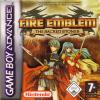







 endings is Offline
| ID: 1096501 | 34 Words
endings is Offline
| ID: 1096501 | 34 Words
 endings is Offline

