JRPGs are a truly ancient art by this point, perfected down to a science - the cycle of crawling through dungeons, managing resources, growing stronger and proceeding to eliminate what stands in your way. While, of course, there are many games that subvert or outright avoid some of these elements, these are the things I, and many others, think about when we hear the term JRPG. However, with this game, we're going back to an ancient time - the first time a portable console really had the power for a full-fledged RPG, and the experimental nature of one of the Game Boy's first RPGs.
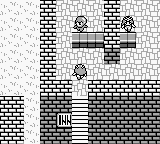
The presentation isn't anything special - nice-looking monster graphics and sprites, a minimalist artstyle, dreary-sounding music and sound effects all show that this is a very early Game Boy title. The translation is similarly minimalist, given the art of game translation was in its infancy at this point, only giving the bare minimum of what was necessary. Even the story is fairly bite-sized, revolving around a tower that connects different worlds and their own miniature stories. You'll be exploring islands and an underwater castle, a world floating in the clouds, and even a post-apocalyptic city under siege by an invincible monster who attacks you as you cross the overworld! The uniqueness of the areas is appreciated, as minimalist as their appearances often are.
Where this game gets experimental and interesting, however, is in the gameplay. First of all, throw away any concept you had of experience points and levels, because neither of those exist here. Instead, the way you grow depends entirely on the character's race. Humans must grow by drinking potions to raise their HP, Strength, and Agility, but can't use magic well. Mutants grow randomly at the end of battles, gaining points in their stats or learning abilities. Monsters grow entirely based on the meat they eat, which may leave them with similar strength or even downgrade their power, depending on what species they are and what species they ate the meat of. All of this is impressively complex, especially for a portable game, though its execution is extremely rough.
First of all, humans suffer from an extremely slow start. The potions they need to grow are expensive, especially at the beginning of the game, and the gear they need to perform their best isn't cheap either - but later on, those things are easy to afford, leading to humans being able to snowball and cap out their Strength and Agility stats. Mutants grow randomly, which is workable - not too dissimilar from Final Fantasy 2, in fact - but there's no way to control their learning of abilities, meaning they may learn useless abilities or even replace abilities you want to use with no recourse. (I ended up just giving my Mutant some magic books late in the game because she just wouldn't learn any useful magic!) You also aren't told when they gain stats or abilities, meaning you need to check your menu constantly to see if they've changed. Finally, monsters - since you have no idea what eating a certain piece of meat does, you can't do anything except find a monster you like through trial and error and pray for the best.
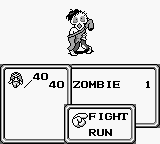
Even with all these flaws, these systems were captivating enough to get me through the game. The balancing is bizarre - while bosses are generally pushovers until the very end, random encounters can and will slaughter you if you aren't prepared to kill them quickly. Enemies can come in groups of up to five, which can chip away at your party very quickly, and healing is a rare and expensive resource for most of the game. Death is punished even more severely; besides just being thrown back to your last save upon a party wipe, anyone who dies in battle will lose one of their "hearts". A character who loses all their hearts is considered dead and cannot be revived, and replacement hearts cost 10,000 GP, making them prohibitively expensive. You'll either be replacing characters with brand-new scrubs at the Guild every so often or saving frequently to reload and avoid character deaths whenever possible.
It gives a very kill-or-be-killed feel to the combat in this game, something that not many RPGs nowadays can replicate very well, and gives the game a very unique feeling. This is the game where I can say I actually used instant death attacks - being able to use the instant death ability STOP and a STONE book helped a ton to get through the final dungeon areas, where you'd normally have thrown those kinds of spells in the trash the moment you acquired them! And, without spoiling things too much, let's just say that this is the only game I know of where you can kill a god with a chainsaw.
All in all, this game is a very, very unique experience, unlike anything else around it at the time, and it was a great showcase of what could be done on the Game Boy that wasn't possible on earlier systems. While it is very, very rough around the edges, showing its age wherever you look, if you're willing to look past the dust and crusty game design, you'll find something truly different, and perhaps something you'll greatly enjoy.
|


 User Notice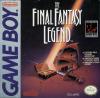



 NovemberJoy is Offline
| ID: 1418599 | 887 Words
NovemberJoy is Offline
| ID: 1418599 | 887 Words
 NovemberJoy is Offline


