Zelda II - The Adventure of Link Review by: Redrunelord - 7.5/10
The Legend of Zelda IIIt is odd how despite being inevitable, change typically unnerves humans. Their instincts of being creatures if habits conflicts with the harsh cold truth of reality: things change. The seasons change, material possessions degrade, loved ones leaves...nothing is immune to the sands of time. In many ways, being an immortal is a far harsher fate than death, regardless of what someone believes happens when they die. Yet, despite being inevitable and omnipresent, humans hates change from the status quo when it is to their favor.
There are countless examples in all forms of life, especially in various types of media. If a band should decide to try something new, they will often get hammered with criticism for "selling out." Should a novel or film series try changing direction, it is usually met with harsh criticism (unless the source material was immensely atrocious and the miraculous sequel was a diamond). Video games also do not escape this, though their receptions aren't as cold. One notable case of a different part of a franchise would be the Second Legend of Zelda Game.
This is the only game in the series that is a true sequel to the first "Legend of Zelda" game, yet it differs immensely in game play style. A major criticism of this game is directed exactly of that: it is not the same as the other games in the series. This game, unlike the other Legend of Zelda titles (Those official Philip CDI Zelda games notwithstanding) is a side scroller adventure. It is not a 2d overhead game (except for the over-world map), nor a 3d third person, but a side scroller, and it receives a lot of flak for this. Immediately dismissing this game due to being different from other Zelda titles is rather asinine, especially as it was literally the SECOND game in the series. As it is the second game in the series, it was more than fair game for Nintendo to experiment with their game. With any discrimination against this game put aside, how does it hold up compared to other NES titles over twenty years later?
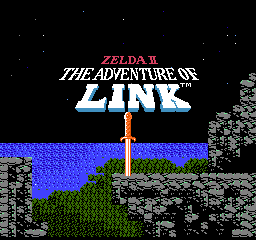
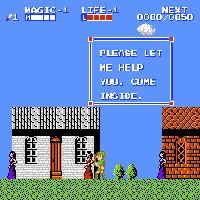
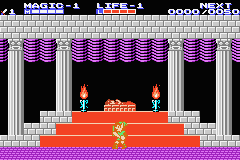
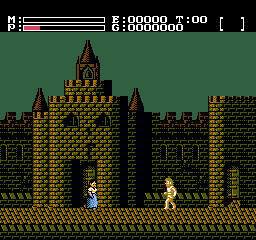
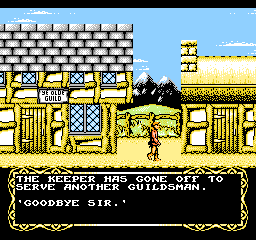
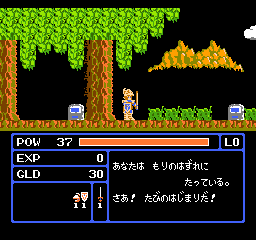
Visually, the game is nearly perfect for what it is trying to do. The main goals of graphic designers are to create competent visuals with sufficient detail, yet still clear and appealing to look at. Whether or not the graphics are appealing is purely subjective, but what can be said objectively is that, for the most part, they gets the job done. Enemies and items are clearly distinguishable, given the technical capabilities of the system, and the animation is fluid. An issue is that it is sometimes difficult to perceive certain depths with blade range, and how close Link can or can't be to a target to hit it. As for the soundtrack, it is entirely subjective. If the player should enjoy the original game's music, it should prove adequate in this sequel. That is a major problem though: it isn't a memorable soundtrack, in glancing. This is one of those soundtracks that generally exists in that the player needs to have devoted hours into the game to understand it clearly, but is otherwise forgettable. As well, the music does not entirely match the situations sufficiently, however it could be argued that said claim is a matter of opinion.
The story line is, as mentioned before, a direct sequel to the first legend of Zelda game. The basic premise is that with Ganon defeated, various "lords" are trying to revive him by mixing the heroes blood or remains with Ganon's remains (a plot line likely influenced by some of the Dracula films done after the Béla Lugosi version). As well, Link has to find a way to revive Zelda, which leaves a lot of room for potential. The story do feel shallow if looked at from a modern perspective, as there is a lot Nintendo could have done with the story to make it more engaging. However, considering that story-oriented games were in their earliest years, it isn't a bad story by any means. Indeed, for the time, it was a fairly good story.
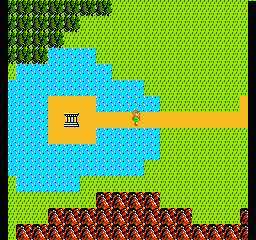
However, as the story isn't the primary focus, it is time to weigh the most important factor: the game play. As mentioned prior, this game is a side scroller. The player would navigate the main world from a bird's eye view, and when they would arrive the player would enter the side scrolling segments. The over-world view is competent, and gets the job done. Along the way, the player may run into enemies if they stray from the main road: if they make contact, the player ends a battle sequence. To exit, the player simply has to go to the far right or left and exit the screen to return to the main world map. These happens a lot, and some of these got infinite enemies spawning (when one dies, another will replace it by moving across the screen, but some will come back right away), resulting in what proves to be both a great frustration and a great way to train. Indeed, training is absolutely necessary to survive in some later stages.
The two main side scrolling areas, however, are towns the player visits and dungeons. In each town, the player will find a place to recover, and a wise old man to learn a new spell from. These spells are often needed to progress through dungeons and various obstacles. In the main dungeons, the player has to fight their way through, gather the dungeon's treasure, and proceed to defeat the boss. To advance through these dungeons, the player needs both good stats and good reflexes. To go through all the intricacies would take hours, but suffice to say that the dungeons do exactly what they are supposed to. The experience system set up is a fairly common one now: gain experience by defeating enemies and finding it hidden/laid around, and use it to upgrade sword damage, total health, and the magic meter. It is a good system, on the whole, but the main problem is that it relies heavily on grinding for hours to gain said experience. To be fair, however, many RPG games and similar titles relies on grinding as well.
The controls are fairly solid, but at times (particularly during boss battles) the player may feel that they share the same stiff nature as the trilogy of Castlevania games on the same console. The game is difficult, no doubt, but the difficulty is very sporadic. The typical TLoZ formula is that the game will grow steadily harder, but this game has huge difficulty spikes back and forth, which can largely only be overcome by grinding. Regardless, the difficulty spike for the third dungeon is irrationally difficult whereas the latter dungeons are easier. It also doesn't help that, once the player loses all their lives or when they start the game, they're teleported back to the castle. This means that Link has to walk all the way back to the dungeon for even so much as a chance to get through again, which adds to the repetition.
Overall, is this game worth looking at? If the player wishes to look past all the poison this game has absorbed over the years, then yes. In the end it is a solid, if not flawed, side scrolling game, and it has its place in any NES collection. It can also be found on a Game Boy Advance cartridge, which was a part of a plethora of games from the NES re-released for the handheld systems. Between overall solid visuals and game-play, this flawed gem is one change that has its place.
Graphics
9 Sound
6 Addictive
5 Depth
8 Story
7 Difficulty
7


 User Notice



.png)
.png)
